Home/Explained/Flight Cancelled? You Can Demand Cash—Even on a…
Flight Cancelled? You Can Demand Cash—Even on a Nonrefundable Ticket
In this report
A cancelled flight or a significant schedule change triggers an automatic right to your money back in cash, not airline scrip, and that right applies even if you bought the cheapest, most restrictive fare on the market. The U.S. Department of Transportation's refund rules, last updated September 2026, erase the old assumption that "nonrefundable" means "your loss" when the airline disrupts your plans. The catch: you must know what qualifies as "significant," what extras you can claw back, and when foreign rules might layer on separate protections.
The Refund Right That Survives the Fare Rules
The DOT's refund obligation applies to every scheduled flight to, from, or within the United States, regardless of whether the ticket was sold as nonrefundable. Under 14 CFR § 260.6, the regulation binds carriers operating in U.S. airspace. When an airline cancels a flight or makes a significant change, and the passenger declines rebooking or travel credits, the airline must process a prompt refund to the original form of payment. This is not a courtesy. It is a regulatory mandate the DOT enforces through its Aviation Consumer Protection Division.
The DOT's dashboard on airline cancellations and delays, updated September 2026, restates this bluntly: passengers with nonrefundable tickets who reject the airline's alternative are entitled to their money back. The airline cannot substitute a voucher, frequent-flyer miles, or a travel credit unless the passenger explicitly accepts it. The refund must include the full ticket price and, crucially, must be automatic rather than requiring passengers to navigate a claims process. Carriers must issue it within seven business days for credit cards, twenty for other payment methods.
The Three-Hour and Six-Hour Lines That Define "Significant"
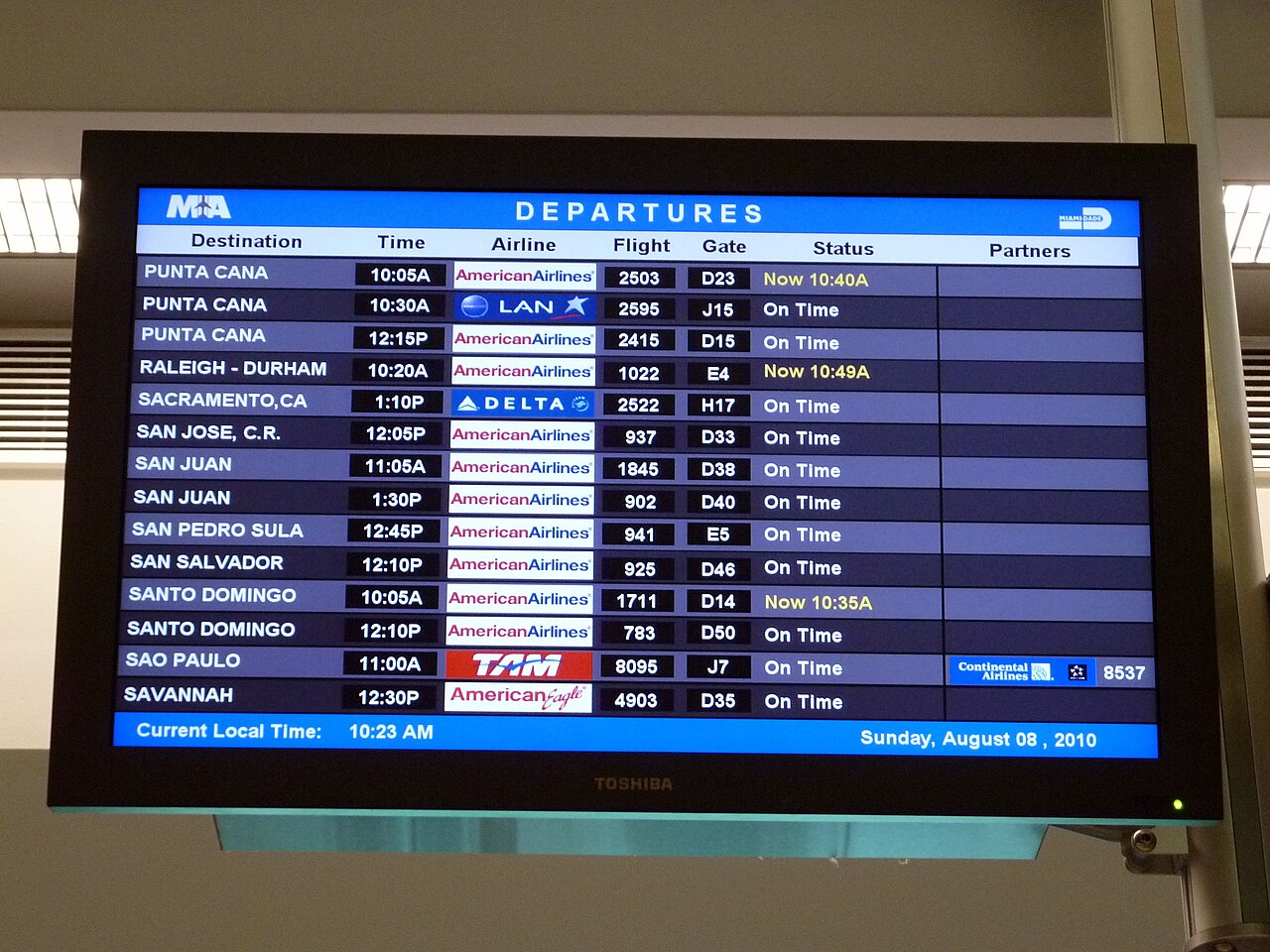
Not every delay triggers a refund. The DOT's "significant change" definition draws sharp thresholds. For domestic flights, the threshold is three hours: a departure three or more hours earlier than scheduled, or an arrival three or more hours later, qualifies. For international flights, the threshold doubles to six hours. These are hard numbers. A two-hour fifty-nine-minute domestic delay leaves you with rebooking or credits as your only recourse; three hours and one minute, and the refund right activates.
The DOT's definition extends beyond pure clock time. A change of departure or arrival airport qualifies, even if the new airport serves the same metropolitan area. An increase in the number of connections qualifies. A downgrade to a lower class of service qualifies. For passengers with disabilities, a connection that is less accessible than the original itinerary qualifies. These triggers are cumulative, not alternative. Any one of them, standing alone, can make a change "significant" under the regulation.
Bag Fees, Seat Fees, Wi-Fi: The Ancillary Refund Layer
The refund obligation does not stop at the base fare. The DOT's rules treat ancillary fees as recoverable when the service purchased becomes unavailable through no fault of the passenger. If you paid for Wi-Fi and the system was broken, you get that back. If you paid for seat selection and your seat assignment evaporated in a schedule change, you get that back. If you paid for inflight entertainment that was not delivered, you get that back. The regulation lists these examples explicitly: broken Wi-Fi, cancelled flights, and involuntary denied boarding all trigger ancillary fee refunds.
Checked baggage operates under a separate, time-bound rule. If your bag is mishandled and not delivered within twelve hours after your domestic flight arrives at the gate, the checked-bag fee must be refunded. For international flights, the window stretches to fifteen hours for shorter flights and thirty hours for longer ones, measured from gate arrival. The DOT does not require you to prove damages beyond the delay itself; the timeline alone creates the entitlement.
When Bumping Becomes a Payout, Not Just a Rebooking
Involuntary denied boarding—being bumped against your will—triggers a different compensation structure from cancellation refunds. The DOT's fly-rights guidance, current as of September 2026, requires payment by check or cash, not credits. The amount depends on how late you reach your final destination on substitute transportation.
If you arrive within one hour of your original scheduled arrival time, the airline owes nothing. This is the "one-hour rule" that caps inconvenience at zero compensation. Between one and two hours late on a domestic flight, or one and four hours late on an international flight, the minimum payout is 200 percent of the one-way fare, capped at $1,075. Beyond two hours domestically or four hours internationally—or if the airline arranges no substitute transportation at all—the minimum doubles to 400 percent of the one-way fare, capped at $2,150.
These figures are floors, not ceilings. An airline may offer more, and passengers may negotiate. But the DOT's formula sets the legal minimum that must be offered in cash or check on the spot.
The EU and UK Rules That May Run Parallel
U.S. law is not the only regime that may govern your itinerary. The United Kingdom Civil Aviation Authority states that a flight delayed by at least five hours triggers a right to abandon travel and receive a refund for untaken flights. EU261 and its UK counterpart, UK261, operate separately from U.S. rules and depend on where the flight departs, where it arrives, and which airline operates it. A flight from London to New York on a U.S. carrier may fall under different protections than the same route on a British carrier. The regimes are not interchangeable, and they do not extend automatically to U.S.-domestic itineraries or to U.S. carriers operating solely within the United States.
The interaction between these frameworks creates complexity for passengers on connecting itineraries. A New York–London–Rome trip may involve DOT rules for the U.S. departure, UK261 for the London-Rome segment if operated by a UK or EU carrier, and potentially both if the entire booking is treated as a single contract under EU law. The DOT has not issued guidance harmonizing these overlaps. Passengers facing disrupted connections should document which carrier operated each segment and which jurisdiction's rules may apply.
What to Demand, and in What Order
Practical enforcement of these rights requires sequencing. First, establish whether your situation triggers the refund rule: cancellation, or a significant change as defined by the DOT's thresholds. If so, decline the airline's rebooking or credit offer explicitly and in writing, then demand the cash refund to your original payment method. Second, inventory your ancillary purchases: seat fees, bag fees, Wi-Fi, priority boarding, meals. If any were not delivered due to the disruption, demand their refund separately, citing the DOT's rule on unavailable services. Third, if you were involuntarily denied boarding, calculate your entitlement under the DOT's denied-boarding formula and request cash or check, not a voucher, for the applicable percentage of your one-way fare up to the caps.
Airlines may offer goodwill gestures—miles, credits, hotel vouchers—beyond these legal minima. These are negotiable add-ons, not substitutes. The DOT's rules do not require carriers to provide meal vouchers or hotel rooms for weather delays or other circumstances outside the airline's control, though many carriers publish customer-service commitments that promise them. These commitments vary by airline and change over time; they are contract terms, not regulations. The refund and denied-boarding rules, by contrast, are federal requirements with no "weather exception" or "operational necessity" escape hatch.
The line between what you can compel and what you can only request is what separates informed passengers from those who accept the first offer. Cash refunds for cancelled flights, fee refunds for undelivered services, and capped but mandatory payouts for involuntary bumping are yours by regulation. Everything else is bargaining.